The holiday party swag station playbook
December parties are our densest season, and the same handful of decisions separate the stations that carry the night from the ones that just occupy a corner. This is the playbook we walk clients through every fall — written down so you can start in July, when the good decisions are still cheap.
1. Build two gift tiers, not one
The single-tier station ("everyone gets a hoodie") works, but the two-tier version outperforms it every time: a volume tier (pressed crewnecks, beanies, totes — fast, plentiful) plus a keepsake tier (engraved tumblers, embroidered caps, personalized pieces with names or initials). The keepsake tier is where plus-ones and long-tenured employees gravitate, and it costs less to add than most planners assume.
2. Design the station for after dark
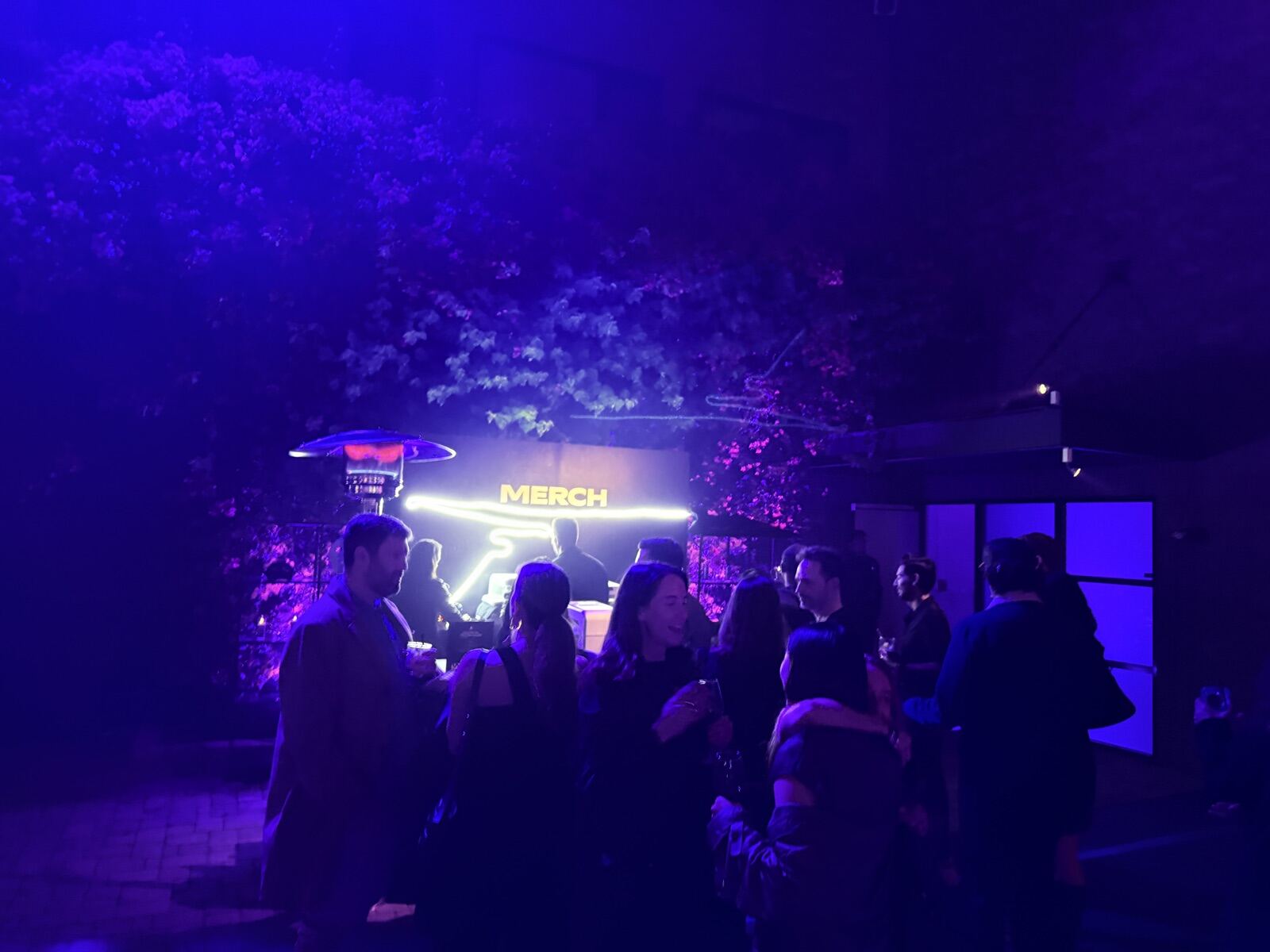
Holiday formats run at night, which changes the visual job. The garment wall needs its own lighting, the counter should glow like a retail pop-up, and the crew dresses for the party, not the warehouse. Done right, the station reads as décor from across the room — the photo in this post is exactly that effect at a client's evening event.
3. Pace around the program, not the clock
- Cocktail hour: soft open — early arrivals browse the wall and place unhurried orders.
- Dinner and speeches: the press keeps running on queued orders; nobody misses the toast standing in line.
- 8–11 pm: the rush. This is where we stack staffing, because post-dinner is when the whole room decides at once.
- Last call: announce final orders 45 minutes before close so teardown never competes with the band's last set.
4. Decide the plus-one policy early
On-demand makes partners easy — nothing is pre-allocated, so a plus-one order costs one blank, not a re-forecast. Decide before invitations go out whether plus-ones get full access or the volume tier only, and put it on the signage so the crew never has to adjudicate at the counter.
5. Respect the September wall
First-two-weeks-of-December dates are the first inventory of our year to sell out, and every other event vendor will tell you the same. Hold the date by early September; art, garments, and tiers can all be decided in October. The holiday format page has space and power specifics, and pricing covers the anchors — Vegas parties add the flat $900 travel fee.
6. Curate a garment menu that fits the season
December is the one month the humble tee takes a back seat. The menu that earns its table space: crewneck sweatshirts as the volume anchor (they read gift, not uniform), a heavyweight garment-dyed option like Comfort Colors for the fashion-aware crowd, cuffed beanies as the fast lane for guests who don't want to guess a size in party clothes, and the Bella+Canvas 3001 tee held as the underlayer pick rather than the headline. Two design colorways per garment is plenty — evening lighting flattens subtle palette differences anyway, and a shorter menu keeps the post-dinner rush moving.
Beyond apparel: the keepsake bench
December is also when the non-garment options earn their spot. Laser-engraved tumblers and bottle openers give the keepsake tier a gift-shop feel, and UV-printed sticker sheets of the year's inside jokes cost almost nothing while disappearing faster than anything else on the table. One engraving station alongside two presses covers a 300-person party's keepsake demand without adding a second line.
7. A 300-guest party, run through the math
Concrete numbers for a typical December booking: 300 guests, five-hour evening, two press stations. Redemption at holiday parties runs high — 75 to 85 percent, because everyone is already in a receiving mood — so plan for roughly 250 pieces. Two presses sustain about 70 finished pieces an hour with a queued-order system, which means the whole crowd clears in under four hours of press time even though most of it lands in the 8-to-11 window. The queue is the trick: guests order at the counter in thirty seconds, go back to the party, and return when their name comes up. Nobody stands in a line longer than the bar's.
8. What December actually costs
The anchors, stated plainly so you can budget in July: staffed stations start around $5,000 for a local evening, staffing runs $250 an hour including setup and teardown, and events outside the OC-LA-SD footprint carry the flat $900 travel fee noted above. Garments bill per piece pressed — the on-demand advantage means the garment line on the invoice matches redemption, not a forecast. For a 300-guest party the all-in number typically lands well under what the same headcount costs in pre-ordered gift boxes, with none of the January storage problem. Full anchors live on the cost answer.